By Dr. Aneela
As we navigate the upcoming weeks of school closure and the transition to online learning via Google Classroom, many parents are feeling a familiar sense of anxiety. How will I help them learn? I am not a teacher.
When your school announces that students will be engaging in Project-Based Learning (PBL), that anxiety can spike. The term sounds rigorous and complex. However, I am here to share a secret: PBL, especially in a remote setting, is the most family-friendly way to learn.
You do not need an advanced degree to guide your child. You only need curiosity and compassion.
This article provides a complete guideline for defining your role and supporting your child during remote PBL.
What Exactly is PBL? (And Why it works at home)
Project-Based Learning is simply learning by doing. Instead of memorizing facts from a textbook for a test, students spend time investigating a complex, real-world question or problem. They create a public product (like a video, a website, or a physical model) to show what they have learned.
+
In a remote setting, PBL is a lifesaver because:
- It reduces screen time: Students research and build, rather than just watch lectures.
- It’s flexible: It doesn’t require your child to be logged on for 6 hours straight.
- It’s engaging: Students solve problems that matter to them.
Phase 1: Redefining Your Role — Meet the ‘Project Coach’
The single most important step you can take is to change how you see your role. You are not the teacher. Your child’s teacher is still the educational expert.
Your new title is “Project Coach.”
A coach doesn’t play the game; a coach motivates, asks questions, and provides structured support from the sidelines. This is especially critical when supporting students of color or families facing economic stress, where adding “academic pressure” to the home can be counterproductive. Connection matters most.Your Goal: Maintain a supportive environment where your child feels safe to take risks and be curious.
Phase 2: Actionable Guidelines for the Project Coach
Here is your 4-step guideline to managing the PBL experience at home.
Guideline 1: Structure the Environment, Not the Minutes
You don’t need to simulate a 9-to-5 school day. What you need is a reliable environment.
- Establish a “Project Zone”: PBL can get messy! It requires physical space to build or spread out research. Designate a corner, table, or even a specific box where their ongoing work can live. This means they don’t have to “start over” cleaning up every day, reducing daily startup frustration.
- Maintain Routines: Keep consistent wake-up and meal times. This provides a sense of safety amidst uncertainty.
Guideline 2: Cultivate Curiosity with One Question
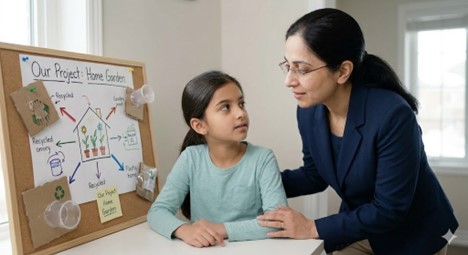
The entire project is built around a Driving Question (e.g., “How can we design a sustainable home garden?” or “How can we minimize economic waste during Eid?”).
- Your Job: Post that question where everyone can see it—on the fridge, the bathroom mirror, or the Project Zone.
- The Power Question: Whenever your child is stuck, frustrated, or seemingly distracted, simply point to the question and ask: “How does what you are doing right now help you answer that question?” This single prompt is often enough to help them refocus and find their own solution.
Guideline 3: Lead with Compassion (Voice & Choice)
Remote learning is stressful for everyone. Connection is your priority.
- Empower Them: PBL is successful when students have “voice and choice.” Let them choose how they demonstrate learning. Can they make a video instead of writing a report? Can they build a physical model using recycled materials?
Be Flexible: Recognize that your domestic situation and external stressors impact your student. Lead with care. If a certain task is causing significant distress, give them permission to pause. A 10-minute walk is often better “tech support” than trying to force a breakthrough.
Guideline 4: Celebrate the ‘Public Product’ (Be the First Audience)
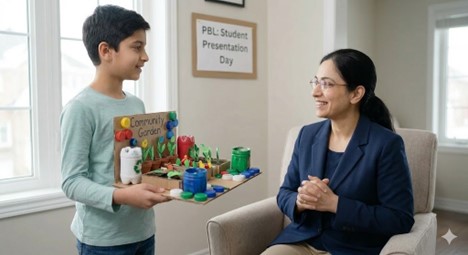
A core component of PBL is that the work must be shared publicly. In a remote setup, you are often that public audience.
- The Power of Praise: Before your child submits their final work to Google Classroom, ask for a private viewing. Have them practice their presentation. This simple act validates their effort and gives them a safe space to refine their work.
- The Reflection Question: When they are done, ask: “What part of this project are you most proud of, and what was the hardest obstacle you overcame?” This focuses on their process and resilience, rather than just the final grade.
Conclusion: Trust the Process
We are facing unprecedented times, but PBL offers a wonderful pathway to keep our children engaged and motivated while staying connected to their teachers and peers. By embracing your role as a Project Coach—leading with compassion and focusing on smart questions rather than smart answers—you are ensuring their success. Trust the process, and trust your child.